In 1899 you could join the Enterprise library by handing over a used book. A Grange brunch in Lostine, a writers’ gathering at Wallowa Lake and four file drawers of one woman’s papers finish the story.
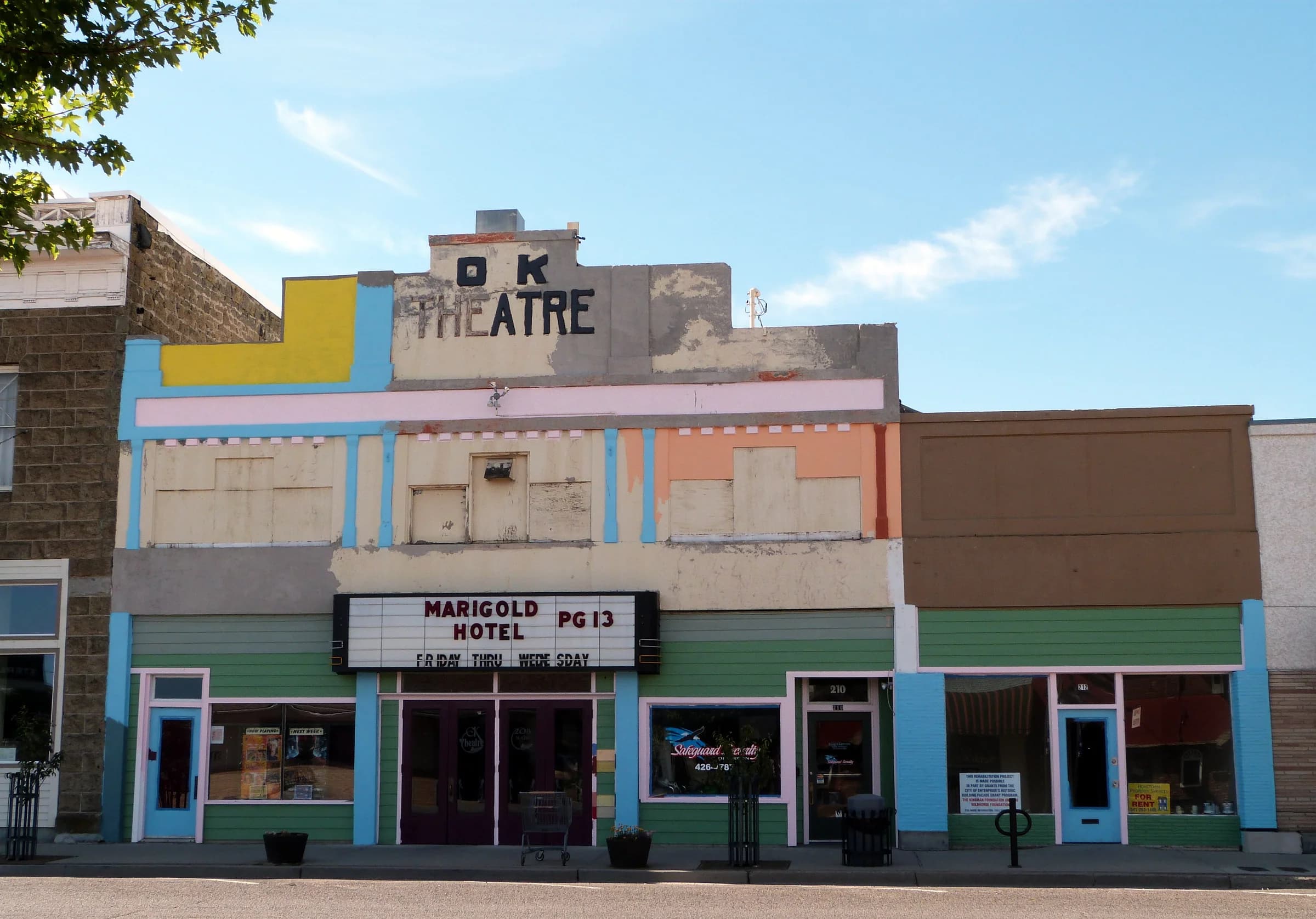
The OK Theatre facade in Enterprise. The marquee records a moment in the past, not a current program.Ian Poellet · 2012-08-05 · CC BY-SA 3.0 · Image & source ↗
In this story 5 sections
Documented history
A library card cost a used book
Enterprise’s library opened in 1899 as a private association. Joining cost a subscription, paid in money or a used book. The books sat in borrowed rooms until the city took the library over in 1910.
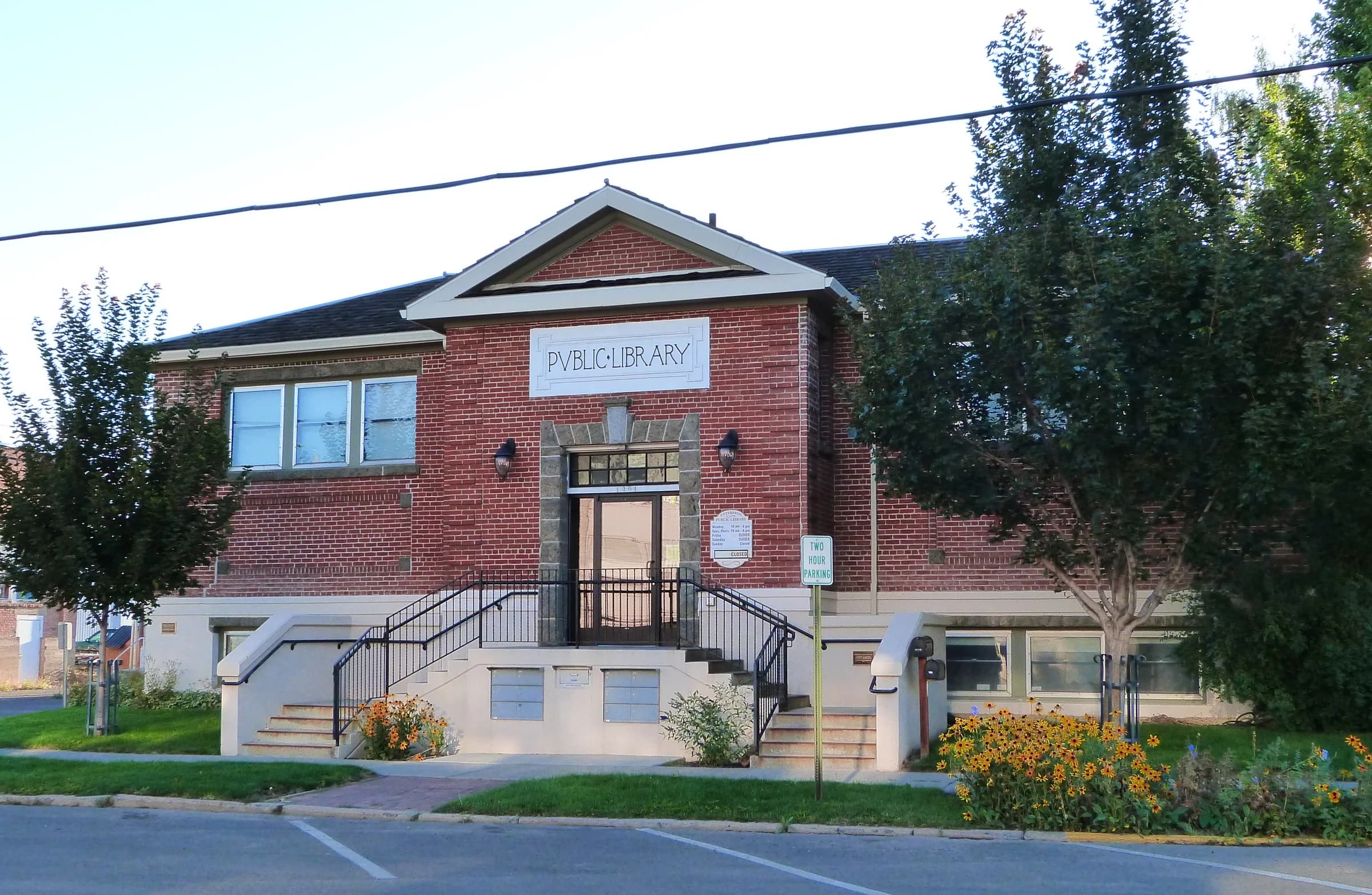
Bertha Millard became librarian in 1911 and stayed until 1959. A Carnegie grant and money from the city helped pay for a building of its own, finished in 1914.
The 1914 building is what gets photographed. Millard’s years at the desk, 1911 to 1959, are what kept it useful.
Someone always had to pay to keep the doors open. In 1899 that was the members. After 1910 the city took it on.
The Enterprise Public Library building. A later photograph of the building discussed below. Ian Poellet · 2013-09-09 · CC BY-SA 3.0 · Image & source ↗
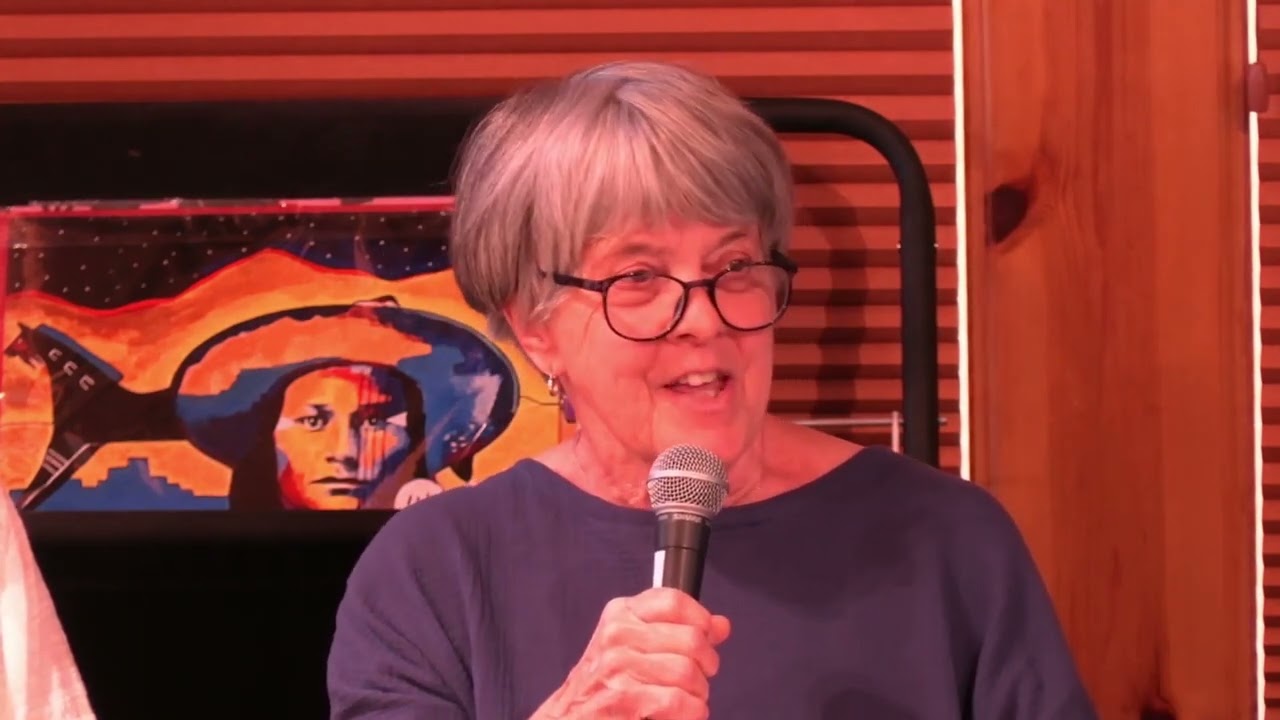
Bob Webb discusses preserving historical recordings and family stories, with Wallowa County elders’ recordings described in the Josephy Center’s program notes.
Southfork Grange in Lostine says its work is about agriculture, education and service. On the ground that looks like gardening and composting workshops. It also looks like Brunch & Browse, a community lunch with food and books in the same room.
A meal gives a stranger a reason to walk in. A workshop gives them something to do with their hands once inside. Both are easier than showing up to a meeting where everyone else already knows the rules.
Behind each of those lunches, someone set the program, unlocked the door and set out the chairs. That repeated work, not just the big annual event, is what keeps a hall alive.
What the record shows: the Grange’s own website describes these programs. It is an invitation, not a count of how many neighbors take it up.
“A few drawers and one funded visit can decide whether years of someone’s research ever reach another reader.”
Documented history
The writers’ conference that moved to Wallowa Lake
In the mid-1980s, bookseller Rich Wandschneider went to a western writers’ conference in Portland. Most of the writers, he found, came from the Willamette Valley and the Interstate 5 corridor. He said so to organizer Kim Stafford. Stafford’s answer: bring the next gathering to Wallowa County.
In 1988, Wandschneider, Stafford and Alvin Josephy did just that. They met at Wallowa Lake under the theme “West Coast Writers and East Coast Publishers.” That gathering became the first Summer Fishtrap.
Where a conversation happens changes who gets to join it, and what they think is worth saying. The Josephy Center’s arts and learning programs give the county another room for that work. Residents get to tell the story from here, instead of appearing as characters in someone else’s.
What the record shows: Fishtrap’s own undated history page tells this origin story. The conference theme is quoted as Fishtrap published it.
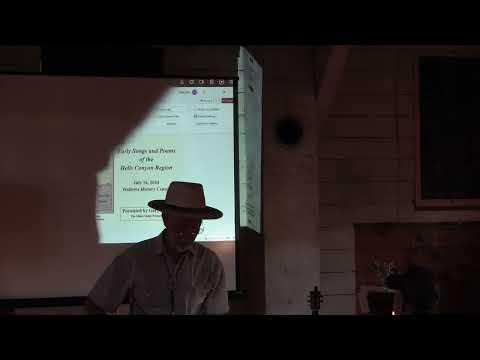
In July 2012, Rich Wandschneider wrote about two visitors: University of Idaho archivists Garth Reese and Devin Becker. Local organizations had brought them to Wallowa County. Small contributions from cultural and community groups helped pay for the visit.
Among what they looked at were four file drawers of Grace Bartlett’s papers. Inside were letters, research notes and work tying local knowledge to other archives.
That is the whole scale of it. A few drawers and one funded visit can decide whether years of someone’s research ever reach another reader.
Wandschneider also named several of the groups working together, among them the county museum’s friends group, the History Center, Homeland and the Josephy Library. No single institution was collecting everything. The county’s memory was being kept by organizations working together.
Prairie Creek, Tamkaliks and a room you can belong in
Historian Marilyn Hulse describes French Canadian Catholic families settling upper Prairie Creek. She also describes German Catholic communities, and other waves of newcomers who brought their own traditions into the valley.
Tamkaliks is a different kind of gathering. Nez Perce Wallowa Homeland sets out its purposes and how visitors should take part. A tribal celebration, a congregation, a library and an art workshop are not the same room with different signs. What you may share, record or join differs in each.
Buildings help. But every account here comes back to a person: a librarian at her desk for decades, an organizer, a keeper of papers, a host. Their work is the difference between a room that exists and a place someone belongs.
Open questions:
Who pays to keep a shared room open today, the way members did in 1899 and the city did after 1910?
How many people actually come through the Grange door for Brunch & Browse?
Where are Grace Bartlett’s four drawers now, and can a reader get to them?
What does Homeland ask of a newcomer who wants to take part at Tamkaliks?
What the record shows: Hulse’s account, written March 2023, describes earlier communities. It does not tell you the faith or background of anyone living on Prairie Creek now.
Organization’s undated retrospective: Rich Wandschneider, Kim Stafford and Alvin Josephy organized the first Wallowa Lake gathering in 1988. The conference theme is quoted as published.
On the night of August 11, 2022, hail broke windows across the town of Wallowa. By the next day a lumber yard in Joseph had plywood on the way, and covering the holes took a night. Repairing the houses took money that arrived in late September, contractors who were already short, and years. The money and the work ran on different clocks, and this guide keeps them apart.
Most businesses in the county start on savings, a small loan and a second job. These are the programs that will lend, match or guarantee money for someone starting or buying a business here, including the lenders built for Native borrowers. For each: what it requires, and what none of them can do. Terms change. Call before you plan around a number.