


Hear another perspective
Eight dams, then too little water near home
A Chinook salmon that reaches the Lostine River has already swum hundreds of miles from the ocean. It has climbed past eight major dams on the Columbia and the Snake. Then, close to home, it met a smaller problem: irrigation ditches pulling water out, and too little water left in the river. That is how the Oregon Watershed Enhancement Board tells it in its project account.
A recovery effort the size of a whole river basin could fail in its last few miles. In 2004, the Nez Perce Tribe and conservation partners sat down with the people who ran those ditches. The simple answer was to close the headgates. They looked for another one.
The result, in 2005, was the Upper Lostine Minimum Flow Agreement. It paid more than 60 farmers and ranchers to keep 15 cubic feet per second in the river through August and September. Trout Unlimited also worked on improvements to irrigation and on water deals.
Fish needed water in the same weeks the farms did. Agreeing that both mattered was only the start. Someone had to pay, the promise had to be a number you could measure, and the work with people upstream had to continue.
Sources1
Published on YouTube by Wallowa Land TrustWatch on YouTube (opens a new tab)
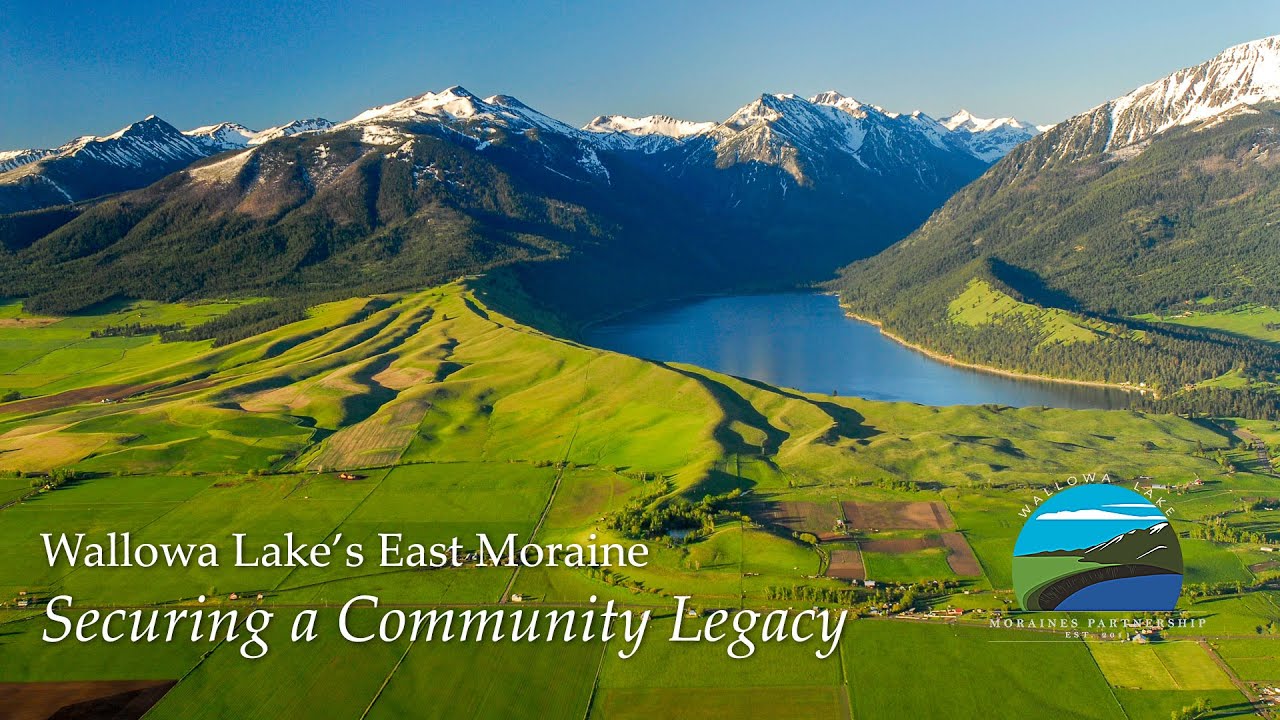
Wallowa Lake's East Moraine: Securing a Community Legacy ↗
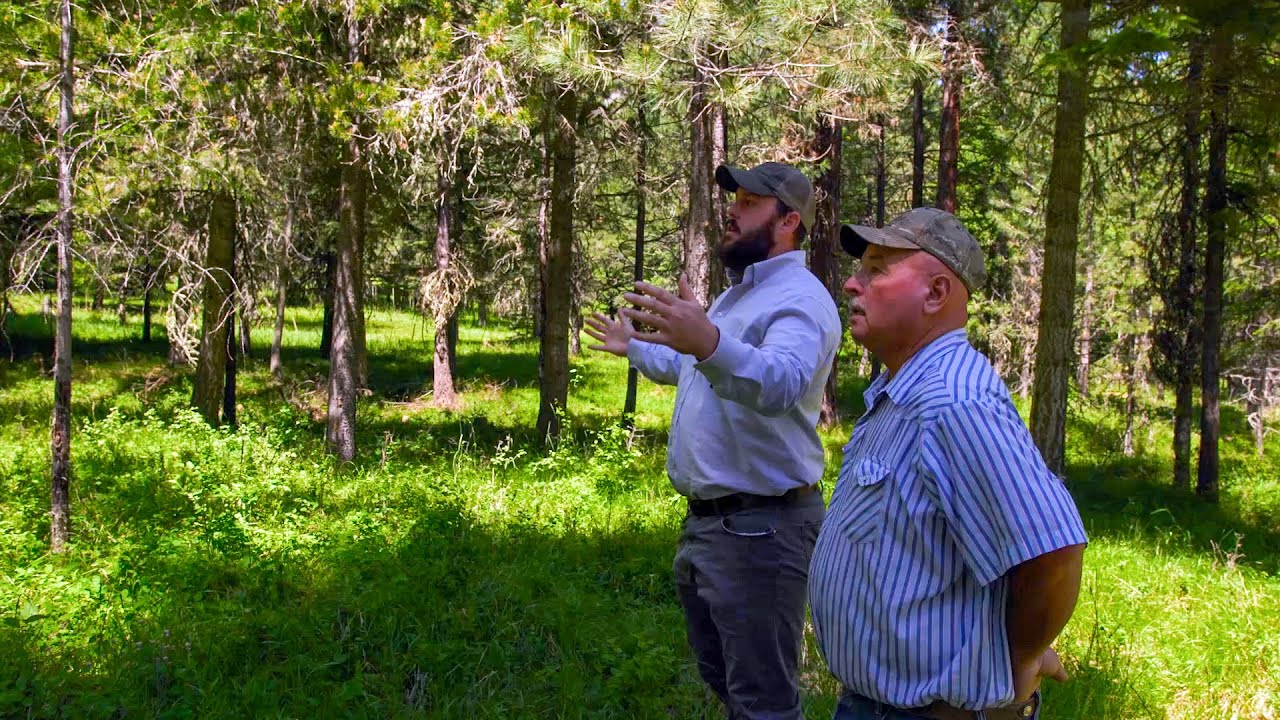
A film from Wallowa Land Trust’s campaign to protect the East Moraine, the ridge overlooking Wallowa Lake.
Source, dates & recording context ↗Coho come home after fifty years away
In 2020, coho salmon came back to the Lostine. NOAA reported they had been gone from the basin for roughly half a century. In 2017, the Confederated Tribes of the Umatilla Indian Reservation, the Nez Perce Tribe, and Oregon’s fish and wildlife agency began putting them back. About half a million young fish were released that first year.
In 2020, NOAA reported, more than 5,000 adult coho bound for the Lostine passed Bonneville Dam. The first of them reached the river that October.
The Chinook water deal and the coho return are two different projects. Together they show that you cannot understand a county river by looking only inside the county. Hatcheries, ocean conditions, distant dams, tribal governments, and local irrigation ditches all meet in the same water.

What the record shows: NOAA’s 5,000 is a count at Bonneville Dam, downstream, not a count of fish in the Lostine. Survival between the dam and the spawning stream is part of the story.
Sources2
“Fish needed water in the same weeks the farms did.”
The dam at the outlet, and the fish that could not pass
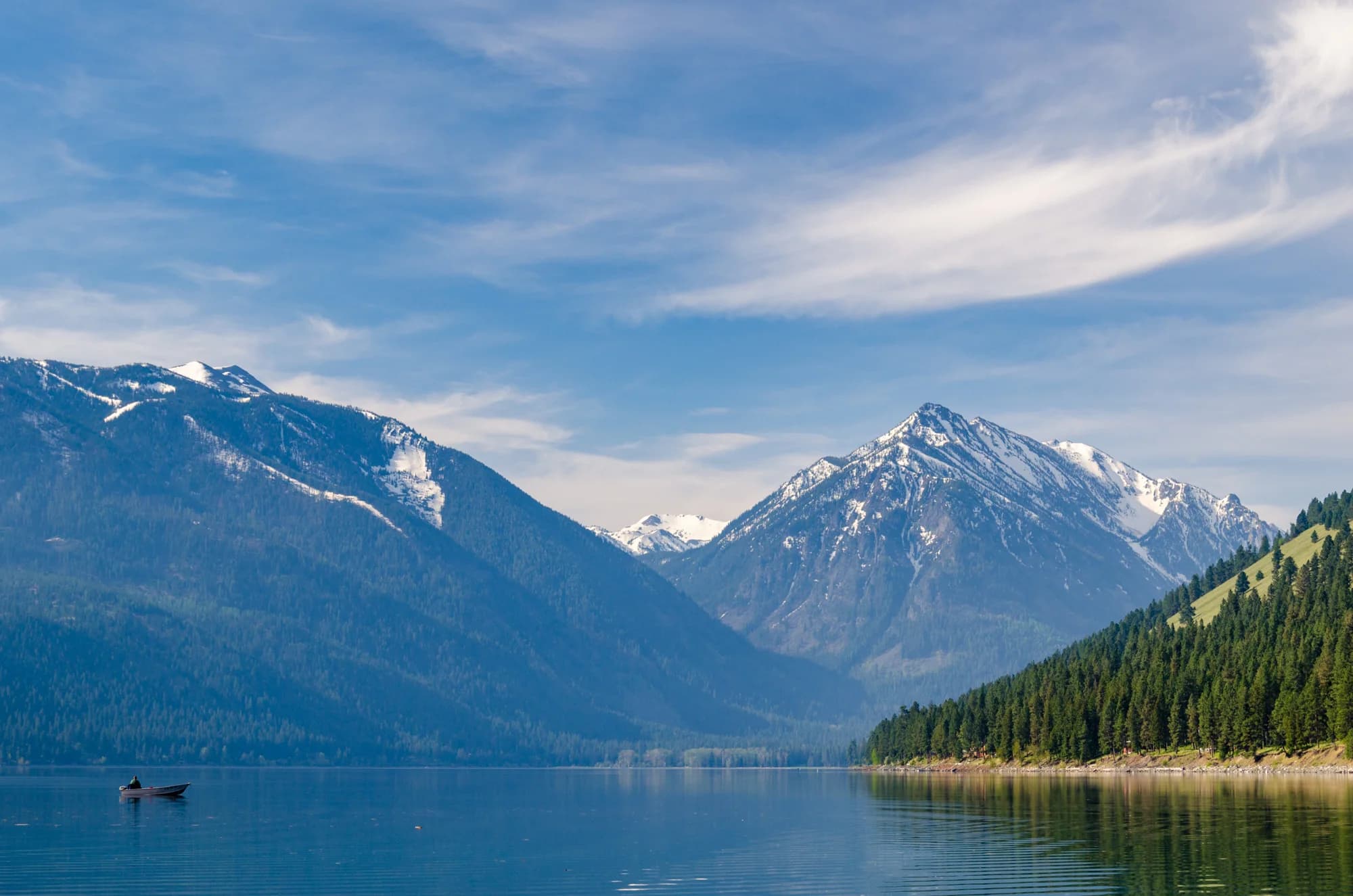
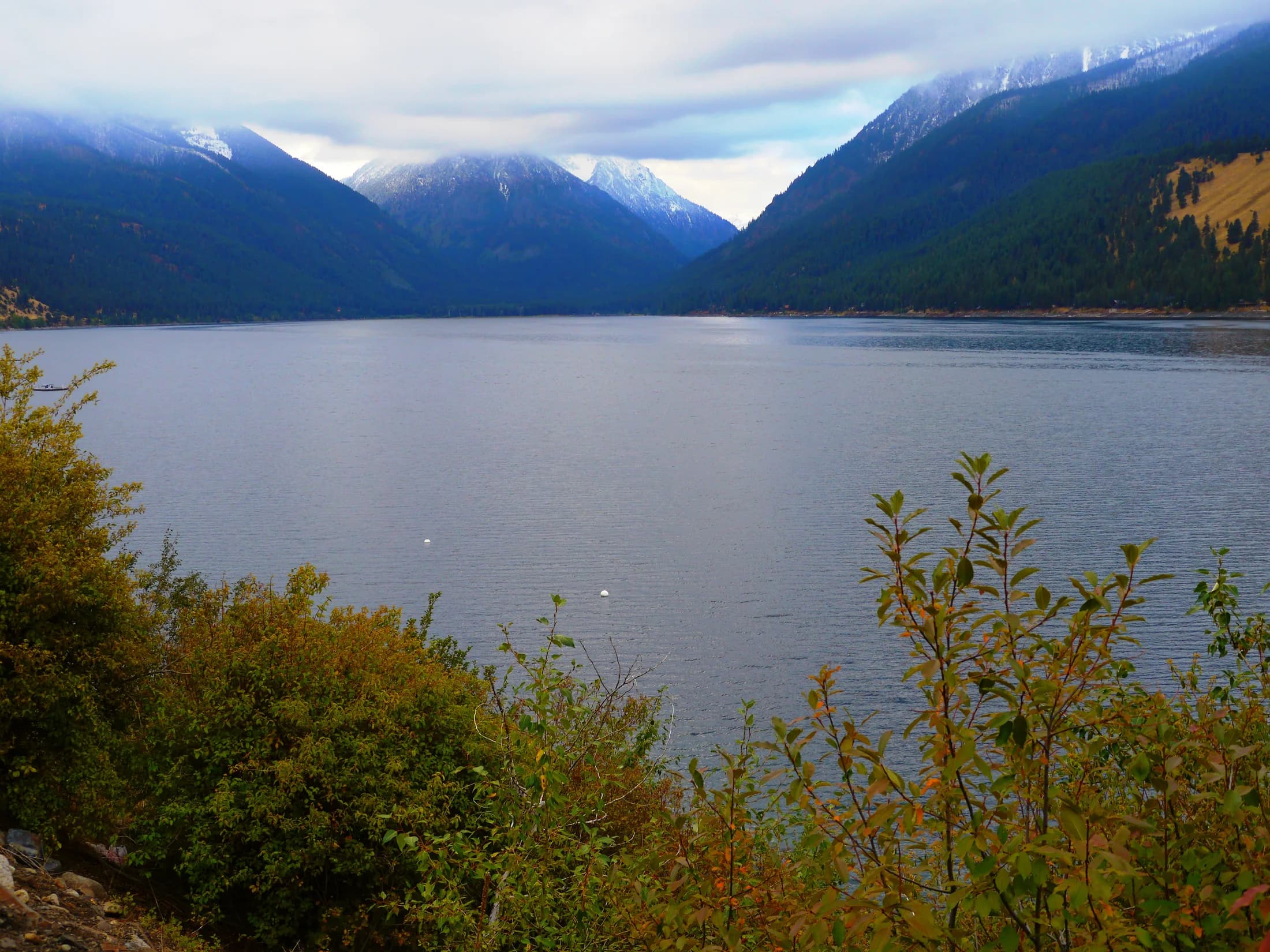
Wallowa Lake empties north through a concrete dam about a mile south of Joseph. The irrigation district that owns it dates the first dam to 1919. It was raised in 1920 and again in 1929, when a powerhouse went in, fed by a penstock, the pipe that carries water to a turbine; the powerhouse burned in 1958. The dam lifts the lake 28.4 feet above its natural level and holds back more than 50,000 acre-feet of water. An acre-foot is enough to cover an acre a foot deep, about 326,000 gallons. That water irrigates more than 16,000 acres of farmland in the upper valley and 21,000 below. It is also Joseph’s drinking water, and a cushion against spring floods in Joseph, Enterprise and Wallowa. In 1996 the state’s dam-safety office listed it as a high-hazard structure. Since then the district has been allowed to store only about 70 percent of the water it holds rights to.
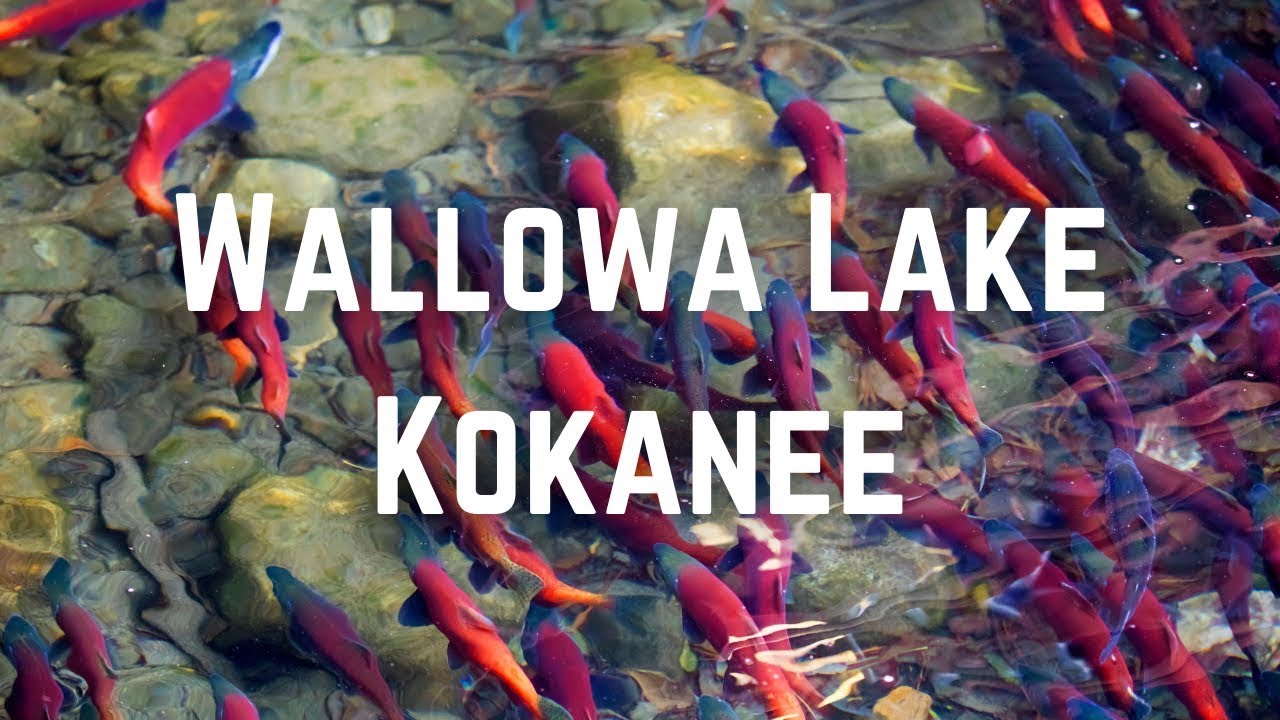
The dam was built with no way for a fish to get past it. Wallowa Lake once had Oregon’s only sockeye run in the Snake River basin; the state fish agency says tens of thousands came back each year before the dam. The run was already failing. Two canneries took about 12,000 sockeye from the lake in two years in the 1880s, and by one account the run was gone by 1905. The last sea-run sockeye anyone remembers seeing in the Wallowa River was in 1926, the year the dam reached its full height. What remain are kokanee, the landlocked form, most of them descended from stocked fish. In June 2010 an angler took a kokanee from the lake that the agency records as the world record.
Fixing the dam took a signature from everyone with a claim on the water. In August 2020 the district, the Nez Perce Tribe, the Confederated Tribes of the Umatilla Indian Reservation and the state fish agency agreed to release up to 5,000 acre-feet of water a year from the lake. Of that, 4,500 acre-feet are for flows in the Wallowa and Grande Ronde rivers down to the Washington line. Up to 500 more are for trades that leave water in the smaller creeks. That agreement was the condition for the $14 million in lottery money the 2019 Legislature had set aside. In 2022 a federal conservation fund gave the Nez Perce Tribe, with the Umatilla tribes, just over $5 million to reconnect the lake for sockeye. The price kept climbing: about $16 million in 2020 dollars, $21 million by 2022, and a first-phase contract of $31.6 million by the time work started.
How the fish would pass was argued for years. The district’s engineers said a ladder would not work on a lake that rises, falls and freezes, and in December 2022 the state fish and wildlife commission adopted a rule letting a dam’s owner trap fish below it and truck them around. The two tribes and seven conservation groups sued. In December 2025 the Oregon Court of Appeals threw the rule out. By then it hardly mattered: the district had already agreed to a ladder, and the Tribe’s chairman had written in 2023 that no one expected the district to pay for it.
Work began on September 2, 2026. The first phase, a lowered spillway with new gates, new low-level outlets, a screened intake and a control building, is due in August 2027. The fish ladder and a downstream passage follow, to finish in 2028. From 2028 the lake can fill about six feet higher than it has since 1996. The fish are being readied too. In the fall of 2023 Idaho gave about 50,000 eggs from its Redfish Lake sockeye program to Oregon and the Tribe. They hatched at Bonneville Hatchery and went into the Columbia in May 2024, below the dams, so that enough would come back in 2026 and after to become the parent fish, the brood stock, for the lake’s new run. Between the dam and the Grande Ronde, nine more barriers and four unscreened ditches wait their turn on the state’s list.
What the record shows: the district’s 2021 fact sheet dates the dam to 1919; the state fish agency’s 2023 focal-area paper says 1916. The cannery count, the 1905 date and the 1926 sighting come from the public opening of a 2003 Columbia Basin Bulletin report. The $31.6 million is the first phase only; the ladder is not yet priced. No source gives a date for the first sockeye released into the lake.
Explore the recordWallowa Lake ↗
The ridge above the lake gets a new owner
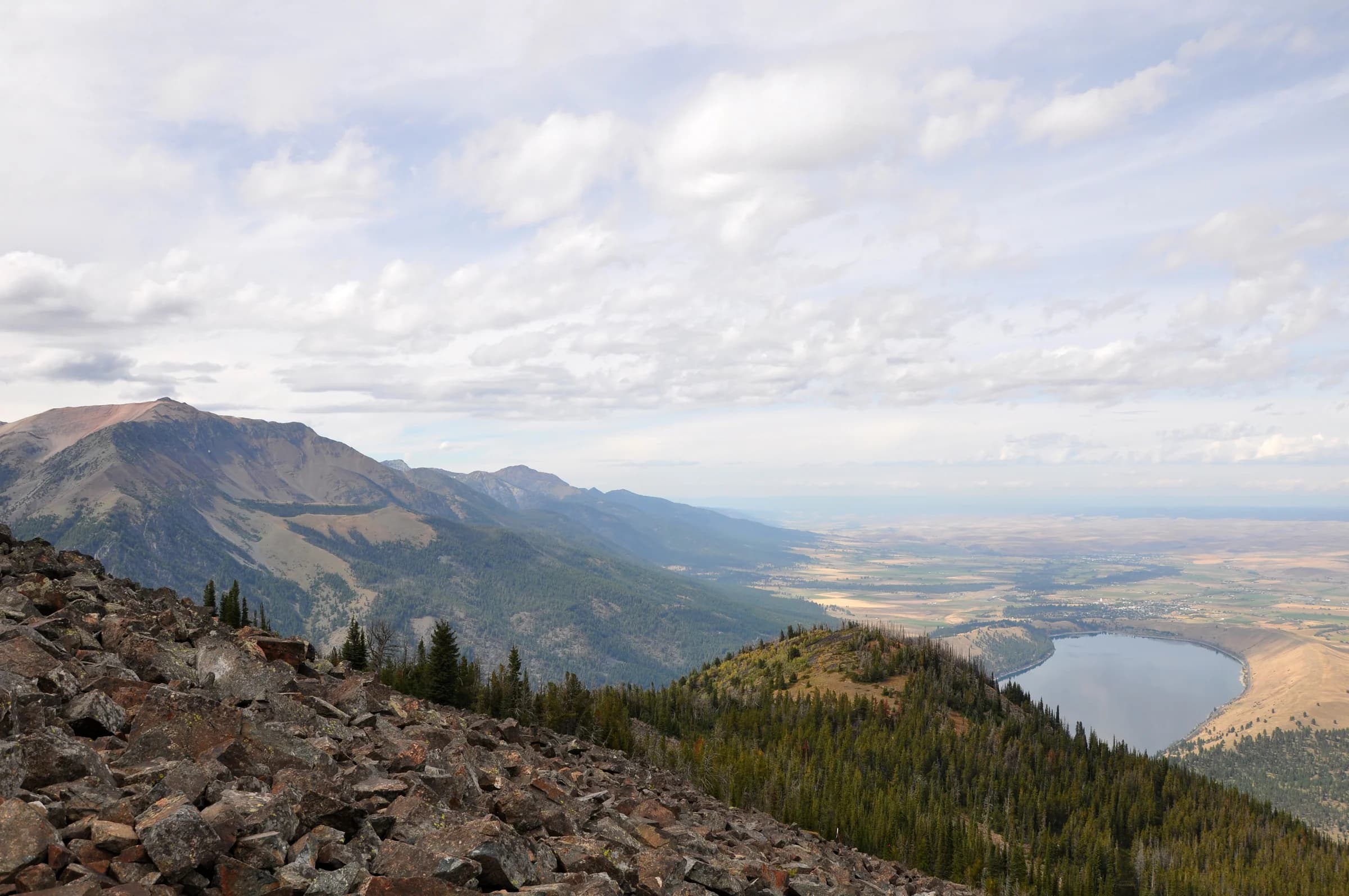
Look up from Wallowa Lake and you see the East Moraine, the ridge overlooking the water. In January 2020, 1,791 acres of it became Wallowa County property. That took years of work by Wallowa Land Trust, Wallowa County, Wallowa Resources, and the Oregon Parks and Recreation Department.
Buying the land was not the end. In January 2023, a conservation easement spelled out what can and cannot happen on the ridge. It put Wallowa Land Trust and the Oregon Department of Forestry in charge of watching over it. The trust’s account treats this as a continuing duty, separate from the broader limits in place when the county bought the land.
The purchase settled who owns the ridge. Management and the easement settle how it is cared for. The view has not changed. Who is responsible for it has.
A deed for 1.5 acres on the Wallowa River
In August 2018, on the Wallowa River, a church gave back a small piece of land. The Oregon-Idaho Conference of the United Methodist Church returned a 1.5-acre parcel to the Nez Perce Tribe. The church had kept this piece while the camp land around it was sold. By then its neighbors were vacation homes and the state park.
Greg Nelson wrote about the ceremony for the conference. A commemorative deed passed to Arthur Broncheau and Mary Jane Miles, representing the Tribe. Young people from a Nez Perce culture camp took part. The plan was for the Tribe’s fisheries department to manage the land for habitat.
One small piece of river connected land ownership, habitat work, and a younger generation’s relationship to home.
Set this beside the East Moraine: the county bought a ridge for a community forest, and a church returned land on the river to a tribal nation. On a map both might get the same color. They are different histories of who holds authority over land.
What the record shows: the account is the church’s own, dated August 2, 2018 and updated August 8. The fisheries plan is what was announced at the transfer, not a report on the habitat since.
Sources14
Keeping the view is a job
Wallowa Resources describes stewardship, teaching, and making a living here as connected work. Wallowology teaches natural history to the public. Between them they make a simple point: keeping a landscape also depends on the skills and knowledge of the people who live around it.
The Lostine agreement gives a way to test any promise like that. Is the commitment a number? Can the people who signed it keep it? Does it hold through a hard season?
The OWEB account describes how the deal was built. It does not say how much water was in the river on any given day in 2026.
The lake view and the river’s last miles belong in the same story. Both depend on decisions that keep going after the announcement. People value the view. Keeping it, and keeping a river that works for farms and fish, is work.
What this story still cannot tell you:
Was there 15 cubic feet per second in the Lostine this August and September?
How many of the 5,000 coho counted at Bonneville Dam in 2020 reached the Lostine?
Are the 60-plus farmers and ranchers still in the agreement, and is anyone still paying?
What does the 2023 easement allow on the East Moraine today, and who checks?
What has the Tribe’s fisheries department done with the 1.5 acres since 2018?
When will the first sockeye go into Wallowa Lake, and will the ladder be finished by then?
Follow the evidence
Sources & further reading
- Lostine River: Telling the Restoration Story ↗Oregon Watershed Enhancement Board · Accessed 2026-09-13
Upper Lostine Minimum Flow Agreement, project history and links to technical evidence.
- Restored Coho Salmon Run Supports Tribal, Sport Fisheries in Northeast Oregon ↗NOAA Fisheries · Accessed 2026-09-13
2020 report. A dated account of a return, not a current run count or fishing regulation.
- Wallowa Lake Dam Rehabilitation Project: testimony and project fact sheet to the Joint Subcommittee on Capital Construction ↗Oregon State Legislature, submitted for the Wallowa Lake Irrigation District · Accessed 2026-10-13
May 6, 2021, by the district’s project manager. Dam timeline 1919 to 2001, a 28.4-foot raise over the natural lake, more than 50,000 acre-feet of storage, 16,000 and 21,000 irrigated acres, $16.0 million in 2020 dollars; fish passage was assumed to be trap-and-haul at the time.
- News release on the Wallowa Lake Dam agreement, September 23, 2020 ↗Oregon Department of Fish and Wildlife · Accessed 2026-10-13
The August 2020 agreement among the district, the Nez Perce Tribe, the Confederated Tribes of the Umatilla Indian Reservation and ODFW: up to 5,000 acre-feet a year, 4,500 for instream flows to the Washington line and up to 500 for water trades. Dam built in 1919, at reduced storage since the 1990s; Wallowa Lake as Oregon’s only Snake basin sockeye run, tens of thousands of fish before the dam; kokanee mostly descended from stocked fish; HB 5030’s $14 million in lottery funds and the delayed bonds.
- Wallowa River Fish Passage and Flow Restoration (Infrastructure Investment and Jobs Act focal area) ↗Oregon Department of Fish and Wildlife · Accessed 2026-10-13
February 2023. By this account the dam was constructed in 1916 and rebuilt in 1929; listed high hazard; limited to roughly 70 percent of the district’s water rights; sockeye extirpated in the early 1900s; the 5,000 acre-foot memorandum of agreement; nine passage barriers and four unscreened diversion sites remain downstream, including the Consolidated Ditch four miles below the dam.
- Nez Perce pursue plan to return sockeye to Wallowa ↗Columbia Basin Bulletin · Accessed 2026-10-13
September 11, 2003. Only the opening paragraphs are public: two canneries took about 12,000 sockeye from the lake in two consecutive years in the 1880s; the run was gone by 1905; Alaska sockeye were released in the 1920s; the last sea-run sockeye anyone remembered in the Wallowa River was seen in 1926, the year the dam was raised to its final height.
- $5 million approved for NE Oregon dam project ↗Capital Press · Accessed 2026-10-13
November 19, 2022, by Bill Bradshaw. The National Fish and Wildlife Foundation’s America the Beautiful Challenge grant of just over $5 million to the Nez Perce Tribe, with the Umatilla tribes, for sockeye habitat connectivity at the dam; the project cost then about $21 million against an original $16 million; groundbreaking then expected in fall 2024; passage then planned as trap-and-haul.
- Appeals court ruling on Wallowa Lake Dam is moot ↗Wallowa County Chieftain · Accessed 2026-10-13
January 9, 2026, by Bill Bradshaw. The December 2022 state rule allowing trap-and-haul, the suit by the Nez Perce Tribe, the Umatilla tribes and seven organizations, the Oregon Court of Appeals ruling of early December 2025, the district’s decision to pursue a fish ladder instead, the Tribe chairman’s June 2023 letter that no one expected the district to pay for a ladder, and the $14 million in lottery bonds received.
- Field Reports, June 14, 2024: East Region, sockeye pilot program underway ↗Oregon Fish and Wildlife Commission · Accessed 2026-10-13
About 50,000 sockeye eggs from Idaho’s Redfish Lake program in fall 2023, hatched and reared at Bonneville Hatchery and released into the Columbia River in spring 2024, with a ceremonial release on May 15; adults are not expected back at the hatchery until 2026, when ODFW and Nez Perce Tribe biologists plan the details of the reintroduction.
- Wallowa Lake Dam work gets underway ↗Wallowa County Chieftain · Accessed 2026-10-13
September 3, 2026, by Bill Bradshaw. Work began September 2 with all permits approved on August 26; first-phase scope (lowered spillway and gates, low-level outlets, screened intake, control building, flume) at $31.6 million, due August 2027; fish ladder and downstream passage as a second phase to 2028; from 2028 the lake may fill about six feet above the restricted level, about a foot below the pre-1996 maximum; McMillen Inc. as design-build lead; the dam dated to 1919 and its powerhouse to a 1958 fire.
- ODFW Wallowa Lake ↗Oregon Department of Fish and Wildlife · Accessed 2026-10-13
The agency’s page for the lake: naturally reproducing kokanee and lake trout, stocked rainbow trout, and a photograph captioned as the 9 lb 10 oz world-record kokanee caught on June 13, 2010.
- East Moraine Community Forest: acquisition and acreage ↗Wallowa Land Trust · Accessed 2026-09-13
- East Moraine conservation easement, January 2023 ↗Wallowa Land Trust · Accessed 2026-09-13
Organization’s account of the signed easement; not a parcel-specific legal interpretation.
- Wallowa Lake ceremony honors return of land to Nez Perce ↗Oregon-Idaho Conference, United Methodist Church · Greg Nelson · Accessed 2026-09-13
August 2, 2018; updated August 8. Account by the transferring institution. The fisheries management described is the plan at transfer, not a present-day habitat assessment.
- Stewardship, education, and rural livelihoods ↗Wallowa Resources · Accessed 2026-09-13
- Natural History Discovery Center ↗Wallowology · Accessed 2026-09-13
The site announces that the center is closed for the 2026 season while presentations continue. Older opening information also remains on the page.
How to read the evidence
- Documented history / Project record
- What the cited records say happened, with their dates and their limits attached.
- Reported experience
- What a person or an organization said, credited to them and not treated as everyone’s experience.
- Analysis
- Our reading of the records. Argue with it through the sources it cites.
- Open questions
- What the record does not yet answer.
Every claim is held to the same standard. That does not make every claim equally well supported.