Wallowa · August 2022 and its aftermath · 4 min read
After the hail
On the night of August 11, 2022, hail smashed windows across Wallowa, and a lumber yard in Joseph showed up with plywood. Covering the holes took one night; fixing the houses before winter took money, contractors and time the town did not have.
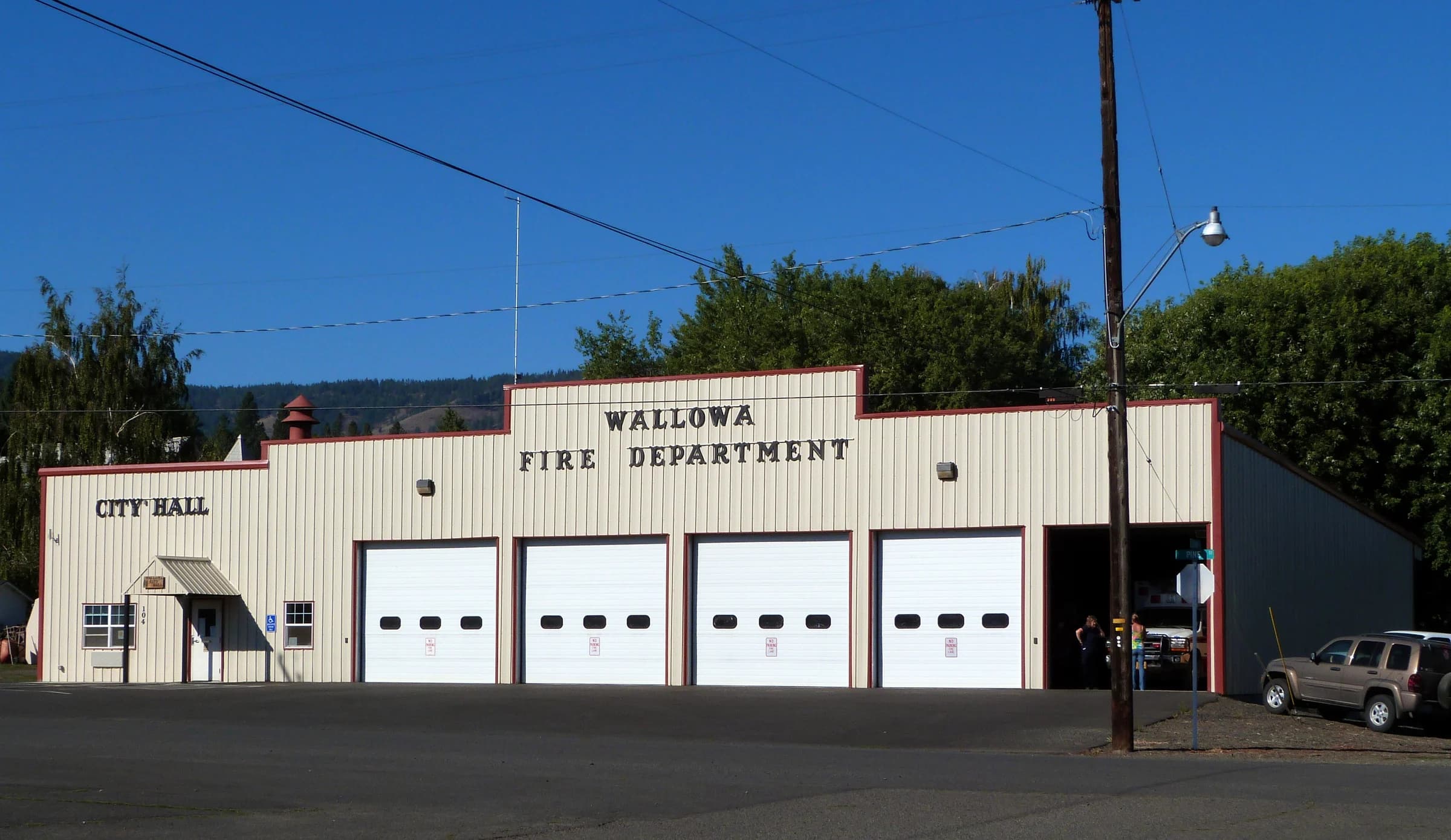
Wallowa’s combined city hall and fire station in September 2013, nine years before the hailstorm. This is a place photograph, not a damage or recovery photograph.Ian Poellet · 2013-09-10 · CC BY-SA 3.0 · Image & source ↗
In this story 5 sections
Reported experience
Plywood came the first night
The hail hit Wallowa on August 11, 2022. It broke windows, and a broken window is a real problem for anyone trying to sleep at home that night. That same night, 1917 Lumber in Joseph brought plywood down to Wallowa. No one had finished a damage assessment yet. The lumber yard just took names down, and people covered their windows.
Wallowa’s mayor, Gary Hulse, told the story two weeks later, on August 25, to OPB’s Dave Miller. The point of the plywood, he said, was to “button up our windows” so people could spend the night in their own homes.
Help started moving between towns before anyone had added up the damage.
What the record shows: a radio interview with Gary Hulse, August 25, 2022, in a computer-created, volunteer-edited transcript. Damage and insurance figures are his estimates as spoken; no household inventory has been independently verified.
Three days after the storm, on August 14, 2022, a fundraiser appeal went out. It described small grants run through the Presbyterian church in Lostine. Each grant was capped at $500 to start. The money could go toward an insurance deductible, plywood, or a broken car window.
You picked up an application at Wallowa City Hall or at the senior center. The appeal itself called $500 “only a drop in the bucket” of what some families would need to rebuild. But it could pay a deductible or a sheet of plywood that week, while no one knew if or when bigger aid would come.
The appeal also talked about cars. Hail had broken vehicle glass, and in Wallowa a car is how you get to work and to appointments. A family could have a dry roof and still have no way to reach a job. Recovery touched several parts of ordinary life at once.
Rural Organizing Project reproduced the appeal on September 7, 2022.
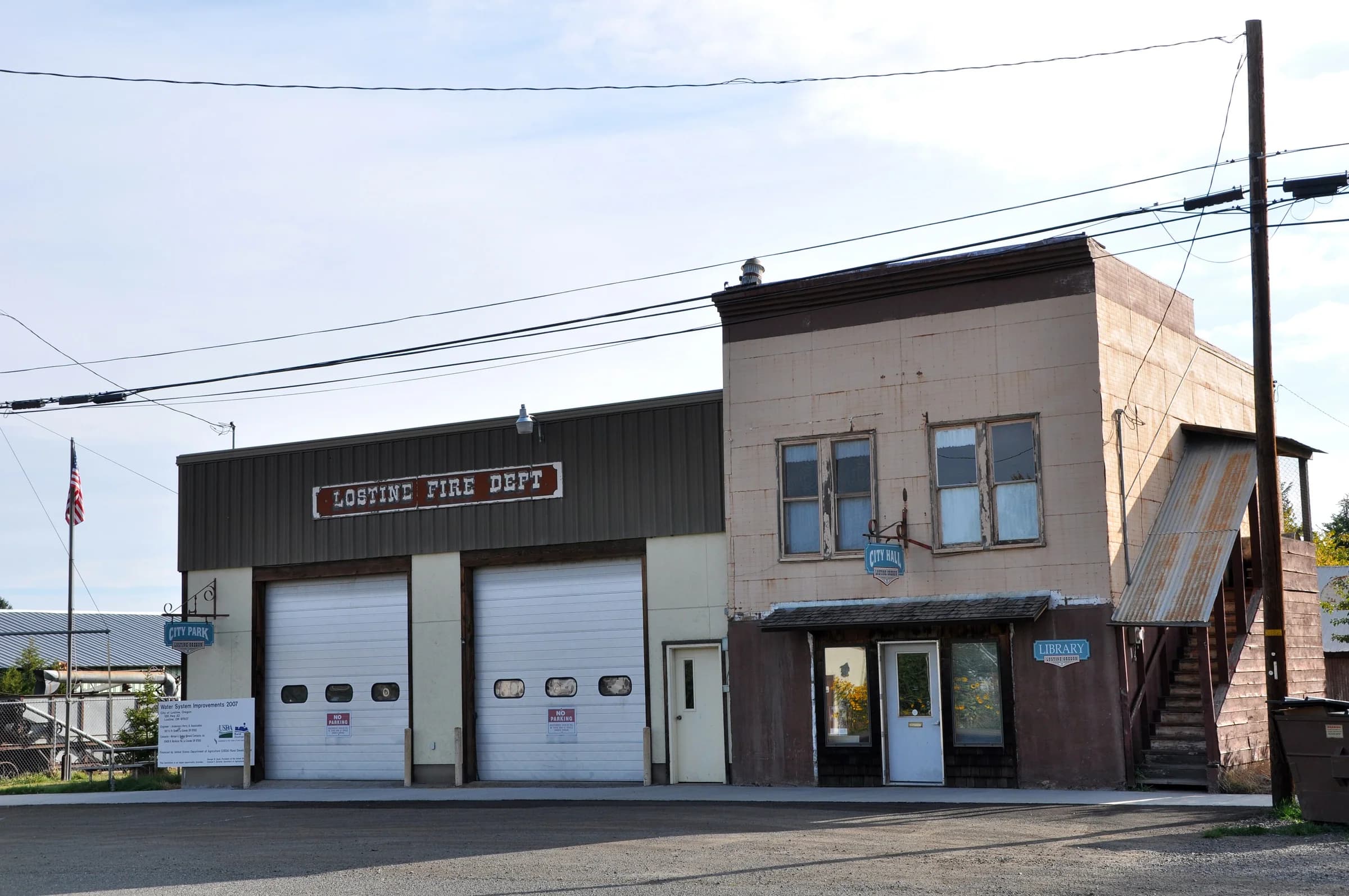
Civic buildings in Lostine. The photograph locates a neighboring community involved in relief; it does not depict the grant program or its recipients. Finetooth · 2010-09-18 · CC BY-SA 3.0 · Image & source ↗
What the record shows: how the grant program was advertised on August 14, 2022, as reproduced by Rural Organizing Project on September 7, 2022. It is not a final list of who received grants or what was repaired.
“The money could buy windows and siding. It could not make the people who install them appear.”
Documented history
“The problem is winter is coming”
By September the question was money, and it went to Oregon’s Emergency Board. The request was $2 million for Wallowa. Legislative fiscal staff recommended paying half for now and waiting for fuller damage estimates before the rest, OPB’s Antonio Sierra reported.
State Senator Bill Hansell pushed back. “The problem is winter is coming,” he said. Waiting for the other half meant waiting for the board’s next meeting, and families would spend that time behind plywood in colder weather. On September 23, 2022, the full board approved the whole $2 million.
Both sides had a point. Better estimates would tell the state where the money should go. But every week of waiting was another week of tarps and plywood, and the board’s calendar became part of the problem.
Then Hulse named the next problem: window and siding contractors were hard to find. The money could buy windows and siding. It could not make the people who install them appear.
A closer look
Different kinds of help, on different clocks
August 11, 2022
The storm; immediate boarding-up described by Hulse.
August 14 appeal
Lostine church microgrants advertised for immediate needs.
September 23
$2 million approved by the Emergency Board.
Before winter
Permanent repair depended on materials, scheduling, and contractors.
Dates and stages from the OPB interview, the reproduced appeal, and September funding reporting. This timeline does not establish when all repairs finished.
The record picks up again years later. In February 2026, the Oregon-Idaho Conference of the United Methodist Church looked back on its disaster work. It lists a $10,000 solidarity grant for Wallowa, covering October 2022 to April 2023. The grant supported a disaster case manager who served 324 Wallowa households, plus other early needs. The entry reports 30 cases closed.
Organized help was still running in Wallowa the winter after the storm, with one case manager and a $10,000 grant behind it.
What the record shows: one organization’s service figures for a defined grant period. 324 is households served by a case manager, not homes rebuilt, and 30 closed cases does not mean 30 households had every loss restored. The same report lists larger grants that covered several Oregon disasters at once; those totals cannot be split out for Wallowa.
A pane of glass, a form, a contractor, a colder month
Recovery in Wallowa was a chain of separate jobs. Someone had to find out who needed help. Someone had to reach them. Someone had to cover the first small costs, add up the damage, find the big money, and then find a person to do the work.
When one link slowed, it mattered, even when the other links were working fine. Neighbors with plywood and a state board with $2 million were both part of it. Neither one tells the whole story by itself.
The scale of it fits in a few objects: a pane of glass, an application form, a contractor who can come, and a colder month on the way. All from the same storm, and each needing a different kind of help.
Still unanswered:
Which households were missed?
Did help reach different groups equally?
How much of the money was spent, and on what?
How many homes were actually finished, counting each home only once?
What did recovery finally cost?
What the record shows: four sources read together, the radio interview, the reproduced appeal, the September 2022 funding report and the February 2026 retrospective. None records which households were missed, whether help reached different groups equally, or the final cost of recovery.
Publication: 2022-09-07. Locator: Opening update; reproduced appeal headed Hailstorm-Stricken Town of Wallowa Needs Help!, created August 14, 2022. Updated December 8, 2023. Fundraiser republication is not independent reporting. Damage/FEMA statements are organizer assertions, not an official eligibility determination.
Publication: 2022-09-29. Locator: Opening Wallowa section, before Nitrates and flooding. Distinguish approved funding from completed repairs. Hulse’s testimony overlaps his earlier interview; legislative decision reporting adds a different evidence function.
Oregon-Idaho Conference, United Methodist Church · Accessed 2026-09-13
February 18, 2026. Locator: OR-ID Conference UMCOR response by the numbers, October 2022–April 2023 entry. Reports a $10,000 Wallowa grant, case manager serving 324 households, and 30 cases closed. Service counts are not a verified number of repaired homes; statewide totals are not Wallowa totals.
How to read the evidence
Documented history / Project record
What the cited records say happened, with their dates and their limits attached.
Reported experience
What a person or an organization said, credited to them and not treated as everyone’s experience.
Analysis
Our reading of the records. Argue with it through the sources it cites.
Open questions
What the record does not yet answer.
Every claim is held to the same standard. That does not make every claim equally well supported.
On the night of August 11, 2022, hail broke windows across the town of Wallowa. By the next day a lumber yard in Joseph had plywood on the way, and covering the holes took a night. Repairing the houses took money that arrived in late September, contractors who were already short, and years. The money and the work ran on different clocks, and this guide keeps them apart.