Where does the value of local work go?

A Wallowa County rancher can raise a steer from birth and still not be able to sell you a steak from it without sending the animal out of the county to be killed and cut. One ranch found that nearly 40% of its costs came after the cattle left the ranch. That is the question under every industry here: between the thing made and the thing sold, who gets the money?

Joseph and the fields around its streets, from the air in July 2007.
Joseph and the fields around its streets, from the air in July 2007. Sam Beebe · 2007-07-08 · CC BY 2.0 · Image & source ↗
In this guide 4 sections
Analysis

An industry is who buys from whom

A list of businesses tells you who is here. It does not tell you what they buy, what they sell, whose labor and machines they depend on, or where the customer lives. That is where the money moves. A ranch, a butcher and a restaurant are three businesses in one chain, and each prospers or fails on the others’ terms.

The two ranch stories on this site took the chain apart in opposite directions. One organized its neighbors’ demand around a closer processor. The other joined a larger network and sold wholesale far from home. Neither is the right answer. Each fit one producer’s customers and one producer’s costs.

Sources1. Growing the 16%2. Where’s the grass-fed beef?
Analysis

Local means four different things

Where a thing is raised, where it is processed, who owns the business and where the buyer lives are four separate facts. A product can be local by one and not the others. Beef raised here, cut in Brownsville and sold in Portland is a Wallowa County product by one measure. A brand with a Wallowa name that buys cattle from Idaho is local by another.

Carman Ranch describes both a cow-share route for neighbors and a wholesale route through a producer group and a Brownsville processor. Those are channels. How much of the money comes back to the county on each is not published, and no public description of a business will tell you.

A closer look

Four places to keep apart

  1. Raised or made

    Where is the product grown, raised or built?

  2. Processed

    Where do labor and machines turn it into something sellable?

  3. Owned

    Who owns the business that sells it?

  4. Bought

    Where does the customer’s money come from?

A way of reading any product, not a measurement. None of the four tells you the other three.
Sources3. About us: three ways to buy Carman Ranch beef4. Wallowa County Community Food Assessment
Project record

Most businesses here have no employees

The census counted 922 businesses in the county with no paid employees in 2023: ranches, contractors, people who clean cabins, people who guide. That is not 922 full-time jobs and not 922 open shops. A survey that counts only storefronts misses most of the county’s work.

Payroll jobs, self-employment, business receipts and household income each answer a different question. A state registration answers a fifth: whether a business was filed, not whether it trades. Add them together and the economy looks bigger, smaller or more lopsided than it is.

Work

More jobs, better paid, and more of them public

Covered jobs are most paid jobs but not self-employment, so ranch and farm proprietors are largely missing. The largest private industry the state would disclose in 2025 was outpatient health care, with 219 jobs. In the year to July 2026 the county had the largest job loss in Oregon, down 8.3%.

Sources: U.S. Bureau of Labor Statistics, 2015 annual averages; U.S. Bureau of Labor Statistics, 2025 annual averages (2022–2024 also cited)

The numbers as a table
20152025
Jobs covered by unemployment insurance2,4952,855
Of those, government jobs648789
Retail jobs257288
Average annual pay, not adjusted for inflation$32,237$55,379
Money

Half of the county’s personal income does not come from a paycheck

Personal income of county residents in 2024, $509.3 million in all.

Transfer payments are money residents receive from government programs rather than from work. Within earnings, government employers, which here include the hospital district and the schools, paid $79.7 million and farms $24.9 million. Earnings are what remains after the other two parts.

Source: U.S. Bureau of Economic Analysis, 2024 estimates, released 2025

The numbers as a table
Millions of dollars, 2024Share
Earnings from work, after social insurance contributions$253.3m49.7%
Transfer payments: Social Security, Medicare, Medicaid and other program income$147.9m29%
Dividends, interest and rent$108.1m21.2%
Sources5. Wallowa County QuickFacts: housing, population and business measures
Analysis

More sales is not more income

A dollar of extra sales can pay a wage, pay a trucker in La Grande, pay down a loan, or stay with the owner. Until you know which, you do not know who gained. A premium price in Portland is not a premium income in Wallowa.

The beef stories leave three questions that apply to bronze, timber, guiding and the rest. Does a shortage of skilled hands cap what can be made? Does sharing a truck or a plant cut the cost of each unit? Can small firms together reach a buyer none could reach alone? They are questions, not a business plan. Nothing in the record says a plant or a cooperative would pay for itself today.

Sources1. Growing the 16%2. Where’s the grass-fed beef?
Analysis

Compare approaches

What each approach is for, and what you would need to know to judge it
ApproachPurposeEvidence to examine
A processor closer to homeCut the distance between the ranch and the cut of meat.Is there enough demand, enough skilled labor and enough margin to keep it running year-round?
Selling through a regional networkReach bigger buyers and share the cost of hauling.What happens to the price, the product’s name, the producer’s bargaining power and the payment terms?
Selling directKeep the customer and the name of the ranch together.What do marketing, delivery, cold storage and finding each new customer cost?
Sources1. Growing the 16%2. Where’s the grass-fed beef?3. About us: three ways to buy Carman Ranch beef
Open questions

What would change the picture?

  • Which purchases leave the county, and which could someone here supply?
  • Which businesses have no one lined up to take them over?
  • How does a five-month season turn into a year’s wages?
Follow the evidence

Sources & definitions

  1. Growing the 16% ↗
    Western Organization of Resource Councils · Examined 2026-09-13

    Publication: undated. Locator: Printed/PDF p. 21, Stafford’s upgrade from custom exempt to USDA-certified; p. 2 publisher statement. Advocacy network recounts work by member Oregon Rural Action. Undated PDF, with summer 2012 event; not independent financial or employment audit.

  2. Where’s the grass-fed beef? ↗
    Cory Carman / PERC · Examined 2026-09-13

    February 24, 2011. First-person essay; paragraphs on institutional customers, processing costs, and distribution. Business experience and price changes are author-reported, not an independent financial audit.

  3. About us: three ways to buy Carman Ranch beef ↗
    Carman Ranch · Examined 2026-09-13

    Undated page examined September 13, 2026. Locators: Get Carman Ranch → Carman Ranch Direct, Cow Share, Wholesale. Producer description; no independent verification of profitability or environmental performance. Images remain linked at source, not licensed for republication.

  4. Wallowa County Community Food Assessment ↗
    Joshua Russell, RARE AmeriCorps; NEOEDD and Oregon Food Bank · Examined 2026-09-13

    Publication: 2012. Locator: Printed/PDF pp. 7–8 methodology; 12–13 6 Ranch; 16–18 processing and distribution. Year established internally by 2012 survey/report context; 2023 URL is upload path. Survey 133 respondents was not a probability sample. Regulations and businesses described historically, not current guidance.

  5. Wallowa County QuickFacts: housing, population and business measures ↗
    U.S. Census Bureau · Examined 2026-09-13

    Read September 13, 2026. Locators: Age and Sex, Housing, Income & Poverty, Businesses. Age figures use V2025; housing costs/income are 2020–2024 estimates in 2024 dollars; nonemployer counts are 2023. Median gross rent is not a current asking rent. Web page examined; direct archival fetch returned 403.

The stories

Where these questions come from.
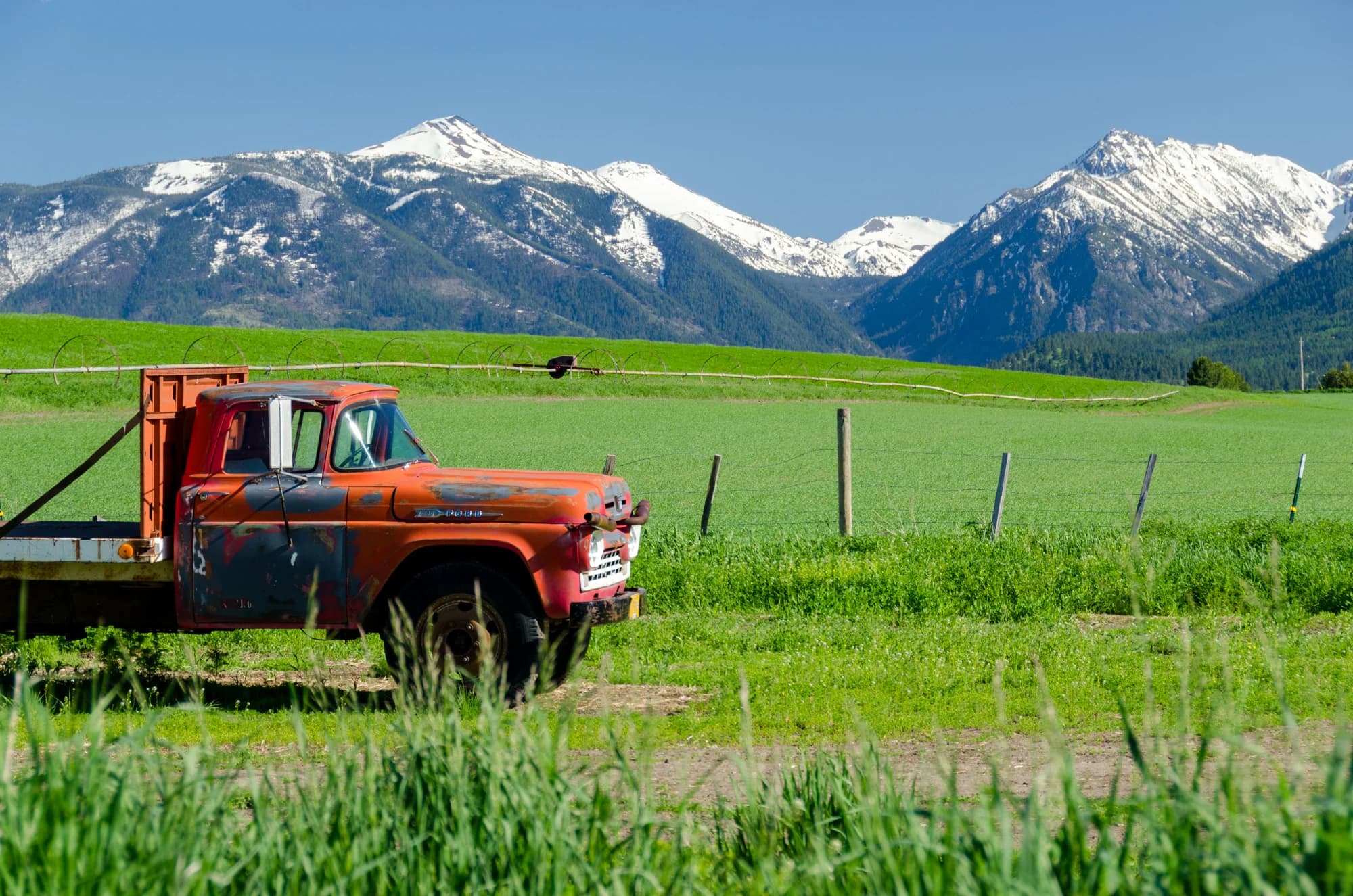
Working land near Enterprise. Landscape context; this photograph is not identified as 6 Ranch or Carman Ranch.
An atlas essay Wallowa Valley & Elgin · 2010–2012, with a 2026 source check

The long way home for Wallowa beef

A Wallowa County rancher could raise the steer, but selling you a steak from it meant sending the animal out of the county first. Two ranches dealt with that in two very different ways.

Read the story
An old truck in a field near Enterprise, with the Wallowa Mountains behind it.
Chapter 04 Work & livelihoods

The sawmill, the foundry, and the city crew

In 1998 Justin Doherty walked out of Joseph High School and into the sawmill. When the mill closed he poured bronze, and when he left the foundry he went to work for the city. One man’s path ties together industries a directory would list apart.

Read the story
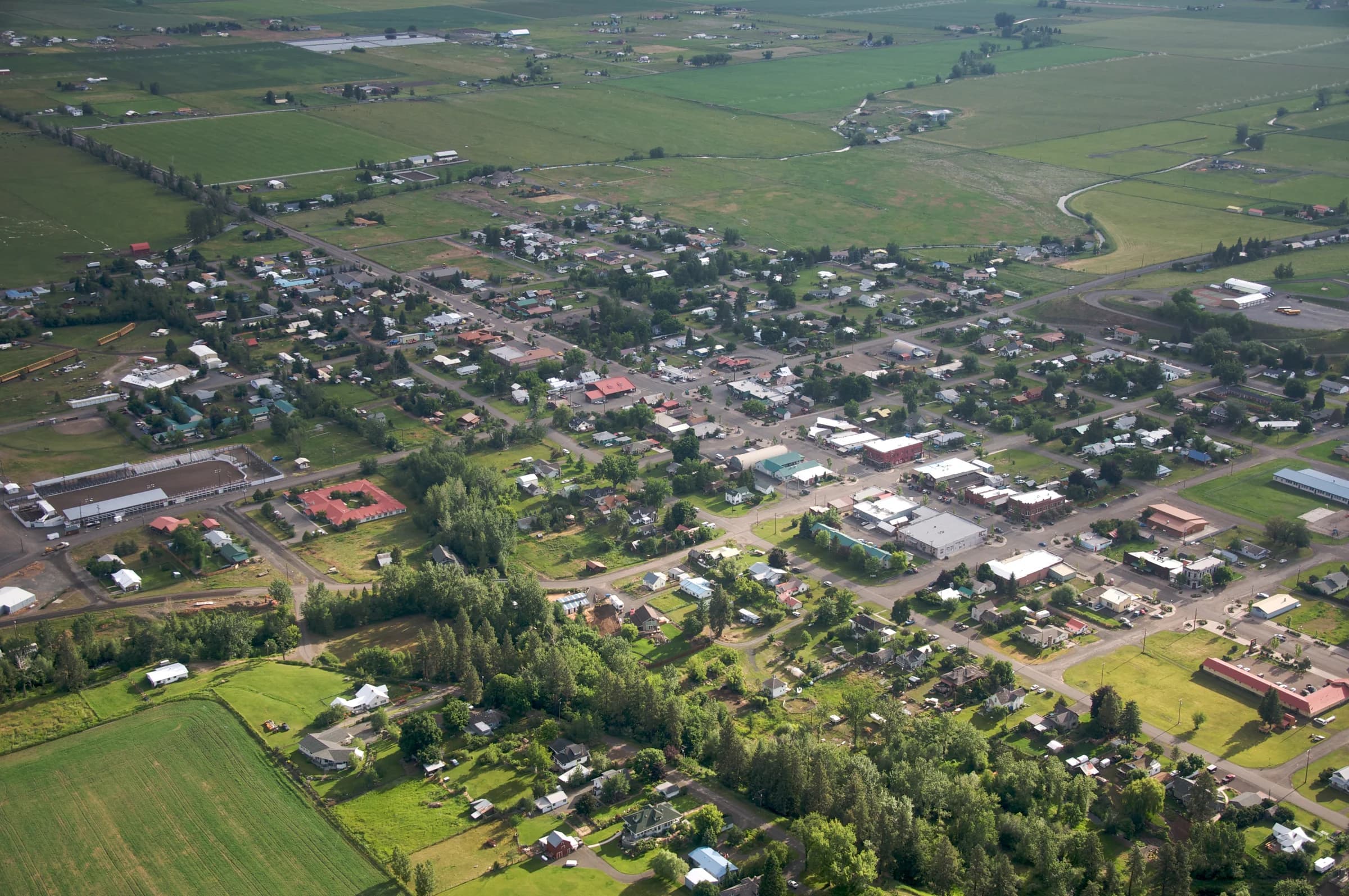
Joseph and surrounding fields. This modern landscape photograph does not identify the fields used in the historical lettuce experiment.
An atlas essay Beyond the familiar account

Lettuce, a carousel, and firewood bound for Dallas

In 1923, Wallowa County set out to become lettuce country, and by 1939 the climate had won. The trying is the story: a horse-powered carousel, firewood shipped to Dallas, a general store with its own radio.

Read the story